
InnerVision® Transillumination System
Illumination for Identification
Engineered for illumination in the GI tract, with a flexible silicone tip designed for safe navigation.
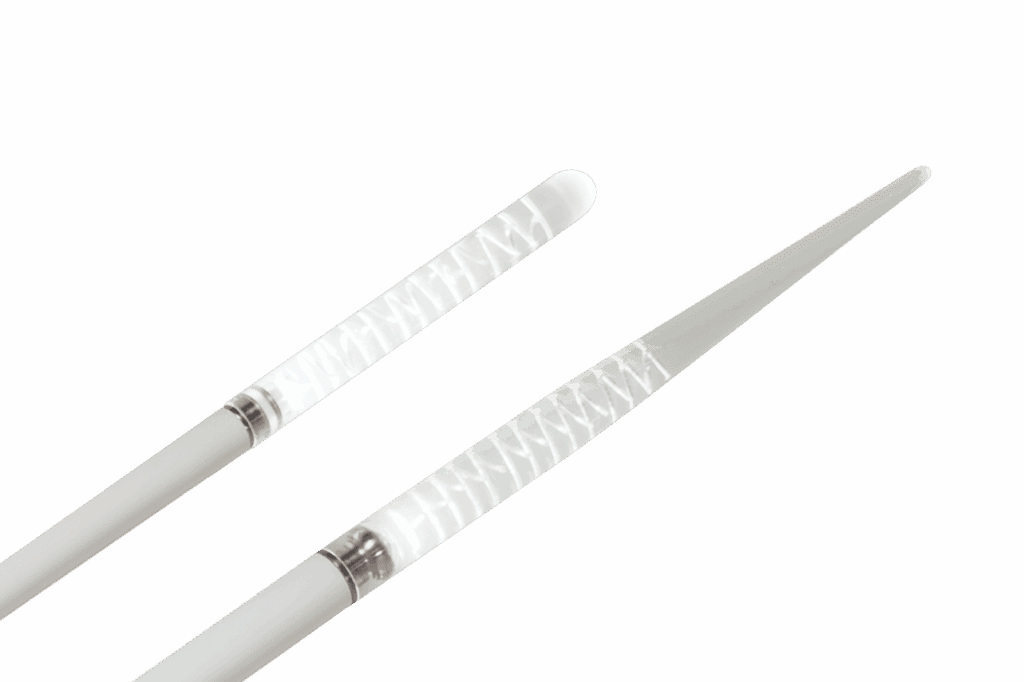

Fiber Optic
A 250- to 300-watt source delivers a bright, powerful light that enhances visibility to help identify the location of the esophagus.
Silicone Tip
The soft, clear tip offers safe flexibility and low-heat illumination for controlled navigation in GI applications.

Low Heat
Maintains safe illumination with minimal trauma during GI surgical procedures.

Radial Light
Light radiates 360° around the tip for enhanced visibility.

Procedural Efficiency
Disposable, easy-to-detach tips help streamline the workflow.
InnerVision Transillumination System Fact Sheet
| Part No. | Description | Use | Size (Fr) | Compatible Connector | Sterility | Qty/Case |
|---|---|---|---|---|---|---|
| 1450-40 | InnerVision Fiber Optic Cable | Reusable | 40 | Circon-ACMI/Olympus | Non-Sterile | 1 |
| 1450-50 | InnerVision Fiber Optic Cable | Reusable | 50 | Circon-ACMI/Olympus | Non-Sterile | 1 |
| 1450-56 | InnerVision Fiber Optic Cable | Reusable | 56 | Circon-ACMI/Olympus | Non-Sterile | 1 |
| 1455-40 | InnerVision Fiber Optic Cable | Reusable | 40 | Storz | Non-Sterile | 1 |
| 1455-50 | InnerVision Fiber Optic Cable | Reusable | 50 | Storz | Non-Sterile | 1 |
| 1455-56 | InnerVision Fiber Optic Cable | Reusable | 56 | Storz | Non-Sterile | 1 |
| 1465-40 | InnerVision Fiber Optic Tip | Single Use | 40 | - | Sterile | 5 |
| 1465-50 | InnerVision Fiber Optic Tip | Single Use | 50 | - | Sterile | 5 |
| 1465-56 | InnerVision Fiber Optic Tip | Single Use | 56 | - | Sterile | 5 |
Delivering Outcomes that Matter
At Diversatek Healthcare, we go beyond providing high-quality devices – we partner with physician offices, ASCs, and hospitals to empower GI professionals to improve patient outcomes. With tailored support, we focus on understanding your unique challenges and goals to help you improve procedural efficiency and achieve clinical success.
Confidence
Luminosity for GI Surgical Guidance
The InnerVision Transillumination System allows clinicians to fine-tune luminosity for optimal visualization during laparoscopic and open procedures. This helps clearly identify the tip’s position, improving procedural efficiency, safety, and anatomical orientation.