
An Inside Look at a 3-Day Functional GI Diagnostics Course
An Inside Look at a 3-Day Functional GI Diagnostics Course
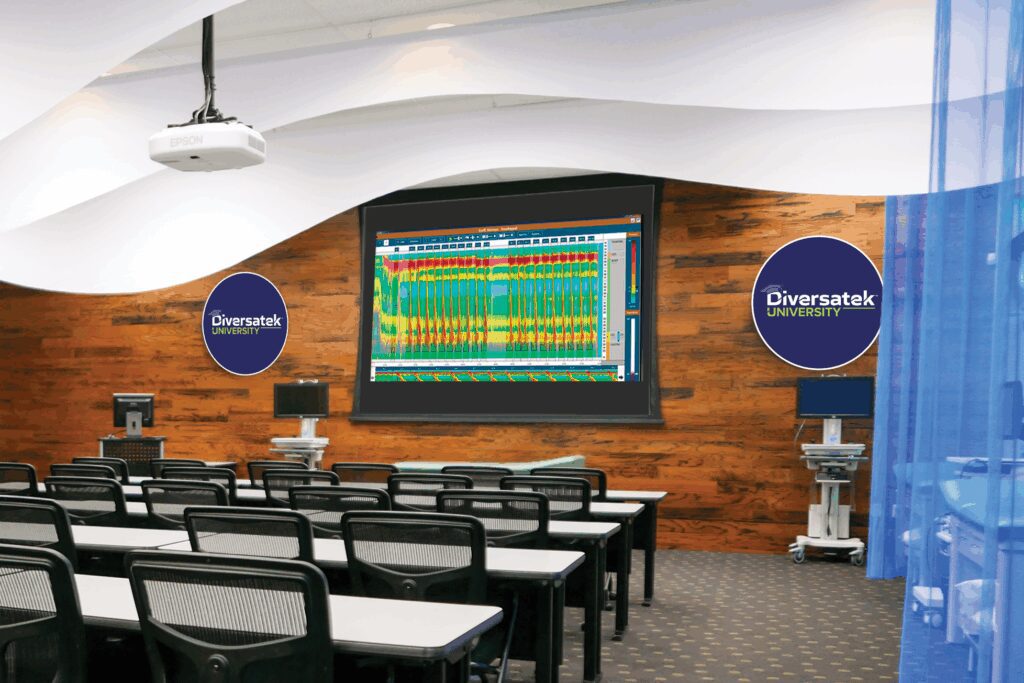
The three-day Functional GI Diagnostics Course is designed for manometry nurses and gastroenterologists to enhance their skills and knowledge in high-resolution esophageal and anorectal manometry and in reflux (impedance/pH) testing. It helps build clinicians’ confidence when acquiring and analyzing test data across a wide range of patients and esophageal disorders. Upon completion of the course, GI healthcare professionals will have a deeper understanding of Diversatek Healthcare’s diagnostic testing systems, enabling them to perform at an optimal level.
We are committed to serving your learning needs throughout this training course. Diversatek Healthcare wants you to succeed. We recognize that both you and your employer have invested considerable time and resources in this clinical education opportunity. While this multi-day course is carefully designed to cover a wide range of material, we’ve learned that adapting to participants’ goals and priorities is key.
Where and how does the training kick off?
The most recent Functional GI Diagnostics Course took place in October 2025 at our Technical Research and Training Center (TRTC) in Highlands Ranch, Colorado, a Denver suburb. With class times typically ending by 5:00 pm, there was ample time to explore the area, which offers a variety of dining and activity options.
Day one began with a light breakfast and a warm welcome from TRTC Vice President & General Manager, Jonathan Moreno. He introduced Linda Castell, one of the Clinical Nurse Educators, who led the course, assisted by the Clinical Support Specialist, Wendy O’Connor. As RNs, they bring decades of experience in manometry and impedance/pH testing, coupled with a deep understanding of our GI testing systems.
The spacious training room featured a diagnostic cart with a patient table positioned at the front, allowing participants seated at tables to clearly see the presenter and equipment. A large projector screen on the front wall clearly displayed the visuals presented during the training.
Day One Training: Reflux Monitoring (Impedance/pH) with Hands-On and Didactic Learning
Reflux training started with a refresher on pathophysiology and terminology to fully prepare students for the upcoming content. Prior to the live procedure demonstration, Linda’s lecture outlined the entire reflux testing process, giving participants time to process the information before focusing on the real-time procedure.
The live patient procedure allowed participants to see our ZepHr® Reflux Monitoring System in action. Linda expertly provided step-by-step details during probe insertion, offering examples of how patients may react, what to expect, and the language to use with the patient. Her clinical expertise was clear as she detailed how to identify the LES (lower esophageal sphincter) for precise placement of the probe above or below the LES, ensuring that the correct impedance and pH measurements are captured. She clearly demonstrated how impedance/pH testing should be performed in a gastroenterology department or practice.
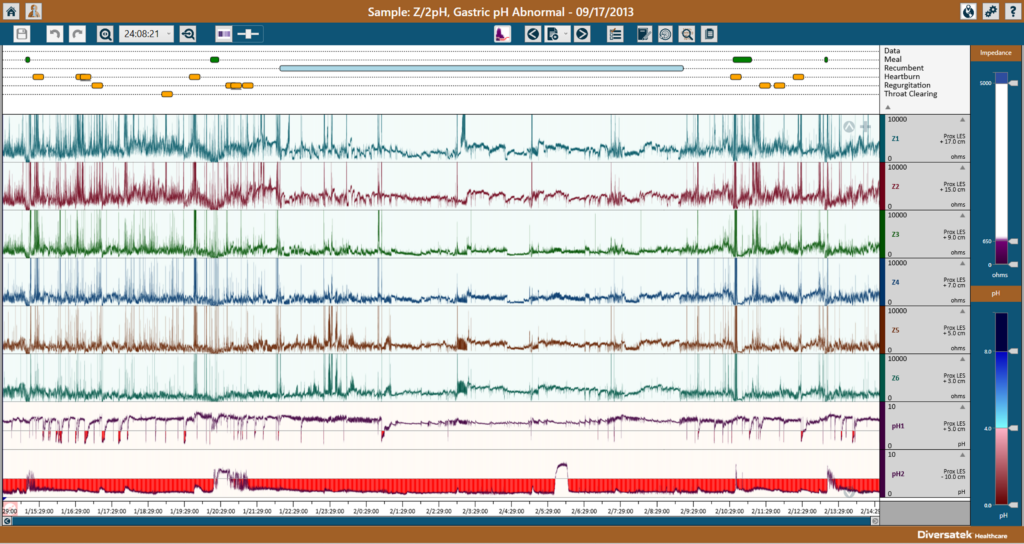
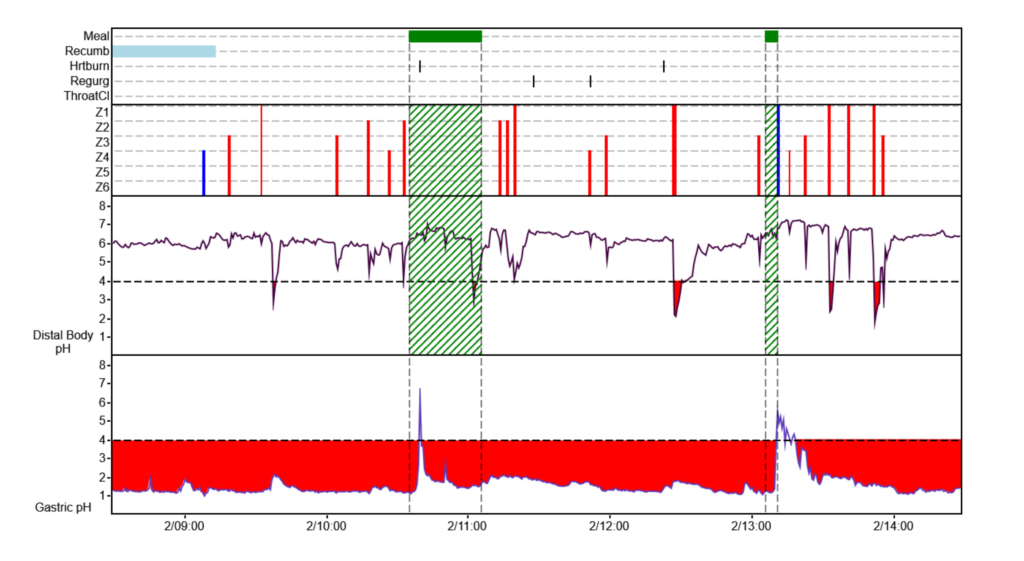
Following the live patient procedure, the training transitioned to analyzing, editing, and reporting the data, which helped participants gain confidence in this critical skill. Using a projector, Linda displayed diagnostic screens showing various results, giving participants exposure to a wide range of impedance/pH data they might encounter in real patient cases. The last portion of the training day allowed participants to analyze and edit “practice” test results; throughout this time, both Linda and Wendy checked in to ensure participants fully understood the data. After a full day of training, participants had the evening to relax before starting fresh the next morning.
Day Two Training: High-Resolution Esophageal Manometry from Set Up to Interpretation
The second day was dedicated to High-Resolution Esophageal Manometry, which began with more didactic instruction on the esophagus, further enhancing the learning that would continue throughout the day. This lecture outlined how Diversatek Healthcare’s high-resolution esophageal manometry simultaneously measures function and pressure. Linda emphasized the importance of identifying the UES (upper esophageal sphincter) and LES, and capturing accurate baseline pressure readings before beginning liquid swallow testing.
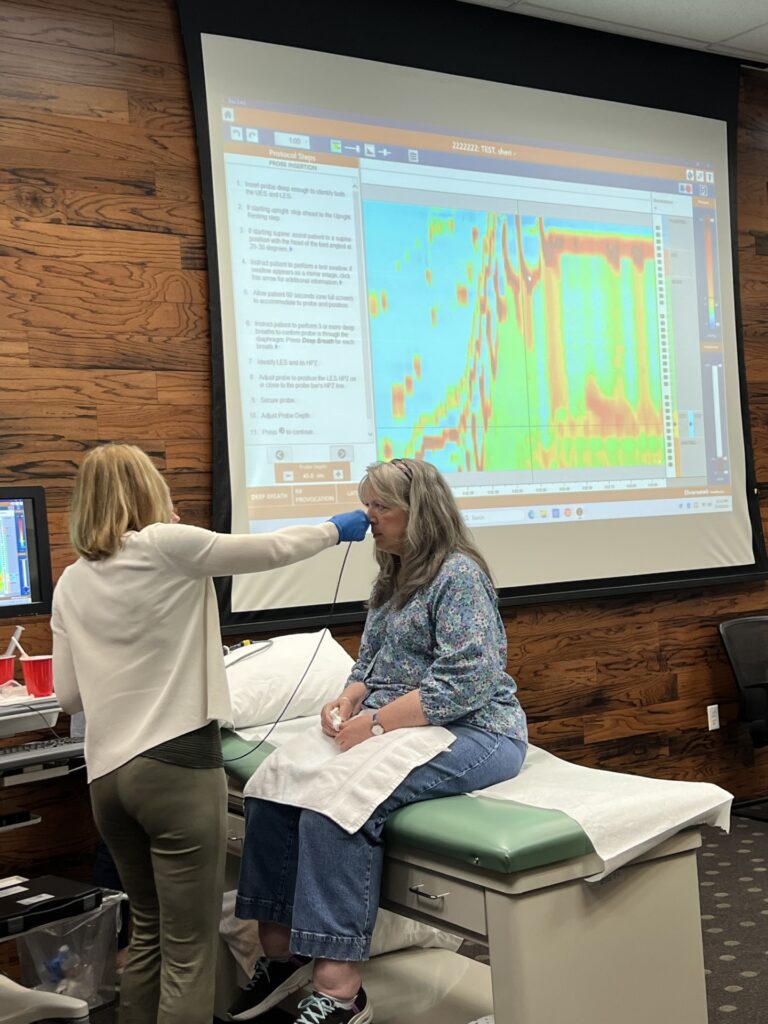
Linda presented a step-by-step guide detailing how to prepare the patient, set up the study, and configure the diagnostic equipment for the procedure, which then led to the live patient procedure. A variety of studies from the Chicago Classification v4.0 were completed, including the solid swallow and rapid drink challenge (RDC); and with each one, Linda offered helpful tips, such as ensuring the LES is relaxed to perform the solid meal swallow study correctly. A substantial amount of time was also spent analyzing data for a range of esophageal peristalsis disorders, including EGJOO and achalasia, to better understand both normal and abnormal readings.
Individual practice time reinforced the importance of accurately analyzing and editing manometry data. Participants’ questions often led to organic discussions that helped the entire group deepen their understanding of the GI testing system.
Day Three Training: High-Resolution Anorectal Manometry with Supporting Tests
The third and final day of training focused on High-Resolution Anorectal Manometry and Pelvic Floor Evaluation, which includes electromyography (EMG) and balloon expulsion testing (BET). This testing system typically doesn’t require a full day of training, so it was scheduled on the last day to accommodate travel plans. Since the schedule followed the same format as previous sessions, participants knew what to expect as the day unfolded:
- Didactic lecture
- Presentation on set up, probe placement, and testing
- Observation of live patient procedure
- Practice editing and analyzing test results
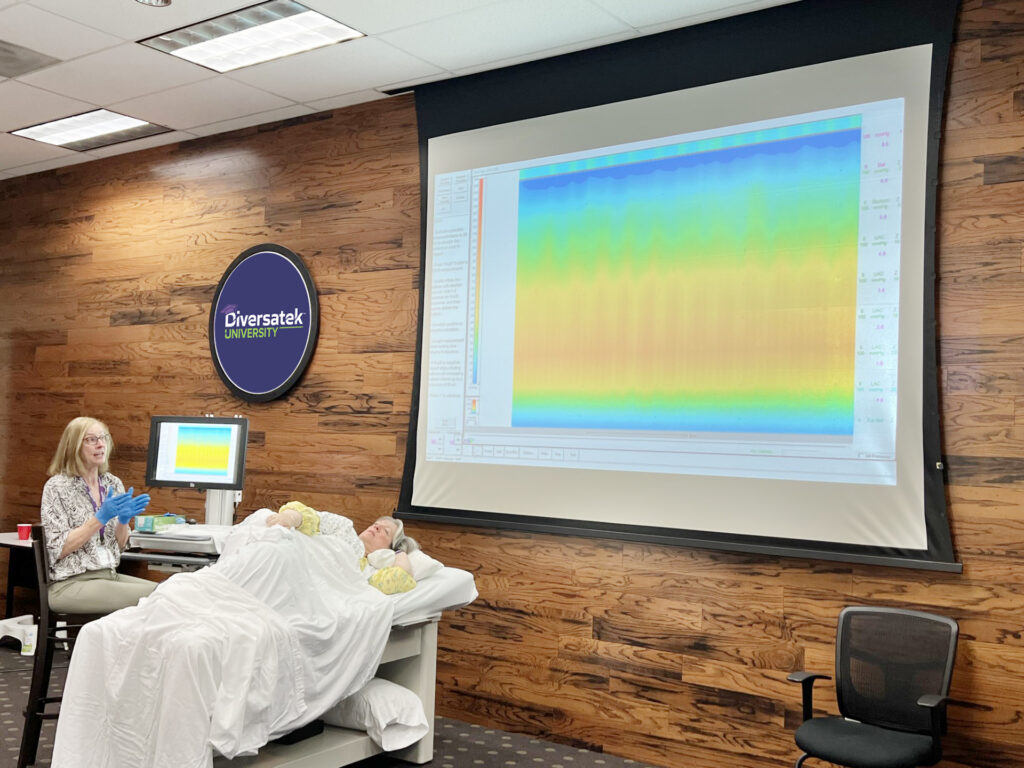
Linda clearly explained the importance of multidirectional sensors and how to correctly position them within the anal canal, except for one sensor, which needs to remain outside the rectal area. Each sensor is strategically positioned to measure duration and activity across various anorectal studies.
What happens when the training is completed?
On the last day of the training class, each participant received a Certificate of Completion, the coursebook, and a digital version of the learning materials. Plus, participants received some new swag from Diversatek Healthcare.
Are there recommendations for lodging and transportation during training?
Once you register for the Functional GI Diagnostics Course, we will provide a list of recommended hotels located near our training center. If you choose lodging within a reasonable distance of the training center, we can help with transportation to and from your hotel.
How do I register for the next Functional GI Diagnostics Course?
Email: orders@diversatekhc.com
Phone: 1.800.558.6408
Reference DEN-FGID to register.
Recent Posts
Contact Us
+1 800 558 6408 or +1 414 265 7620
General Inquiries: sales@diversatekhc.com